¶ What Is Crusoe's Rest?
Crusoe’s Rest is the name of the star system in which Doppler’s setting takes place. It is a system located on the frontier of the 4CA's sphere of influence, and as such, is a location that is under active colonization efforts at the present moment. It was named after a famed space pirate Hark Crusoe, whose lost treasure is still of interest to those on the fringes of rationality.
The star system consists of six planets - Crag, New Gibraltar, Accord, Kitzol, Cahron, and Hallow - listed in order from closest to farthest planet from the system’s sun. There is also a very important place of interest in an ice moon for Cahron - Truth.
¶ The TL;DR
Of the bodies listed, two will likely have the greatest significance to a potential new character as a player of the Doppler server. These are the main planet of colonization, New Gibraltar, where your character probably lives, and the chilly, secret-laden ice moon, Truth, where your character probably works above. At the end of each planet description will be a summation of points that could be used for potential hooks.
¶ The Planets

Crag
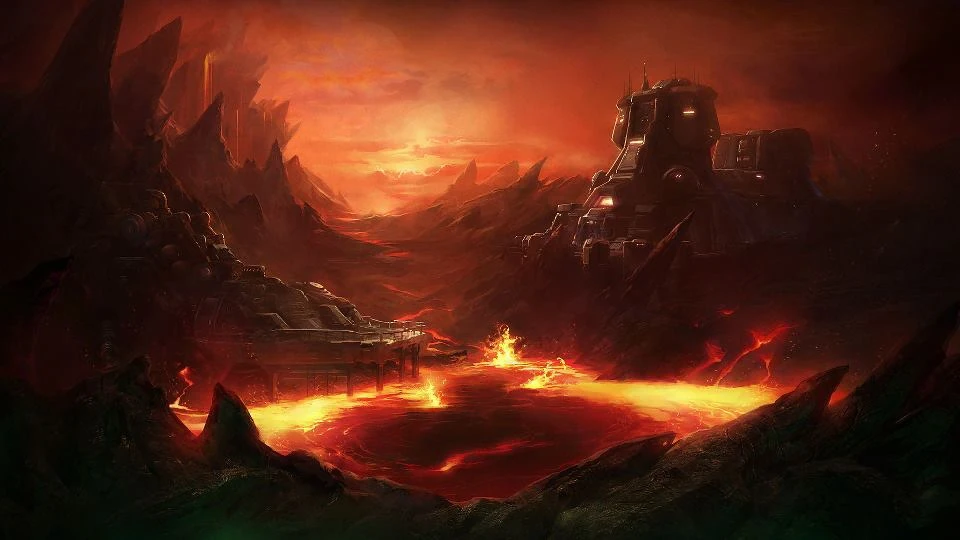
A molten, scorched world, Crag is the closest planet to the sun of Crusoe’s Rest. As a result, it’s extremely inhospitable and hostile to long term residency and colonization efforts, and any attempts at placing stations or bases upon its surface are quickly decimated by the extreme heat exposure.
However, this same planet is also a veritable bounty of mineral-based resources, leading to it being a very lucrative target for mining projects and expeditions, despite the dangers. So far these endeavors have had limited success, but over time the potential strategies for resource extraction have improved, and will continue to do so.
Presently, the current most ‘popular’ strategy involves the creation of pre-fabricated and cheap mining stations that can be put to use on the surface incredibly quickly on the dark side of the planet. They acquire anything and everything they can in a short timetable, fleeing with their hauls and whatever can be salvaged from the pre-fabs themselves before that area is exposed to the sun once more - destroying anything and anyone left to extended exposure. While “Blaze Mining” is an incredibly dangerous job, it’s one that has seen a fair bit of employment due to very lucrative hazard pay.
However, of note as well are reports of these pre-fabs and crews being torn apart and sacked before the risk times approach regarding the sun. As there is little time to properly investigate these sites of attack before it all becomes impossible to approach, this has created conflicting rumors regarding what could be possibly happening - the two chief speculations are torn between some kind of predator species that has found a way to survive in the shadow of Crag, or for it to be the work of particularly bold raiders.

Summary and Hooks
- Extremely hot and hostile environment. Your average person would not have a good reason to want to be here.
- Very lucrative business for the daring, or foolhardy, in “Blaze Mining”.
- Blaze Mining is, however, very resource-intensive. Bulk materials may be required from those who want to contribute to pre-fab stations before their use.
- Hostile presence to mining operations on the planet's surface. As of right now there is no ‘canonical’ source - only two highly speculated cases. Indigenous lifeforms, or raiders. It's been difficult to investigate the exact cause due to the hostile nature of the planet otherwise.
¶ New Gibraltar
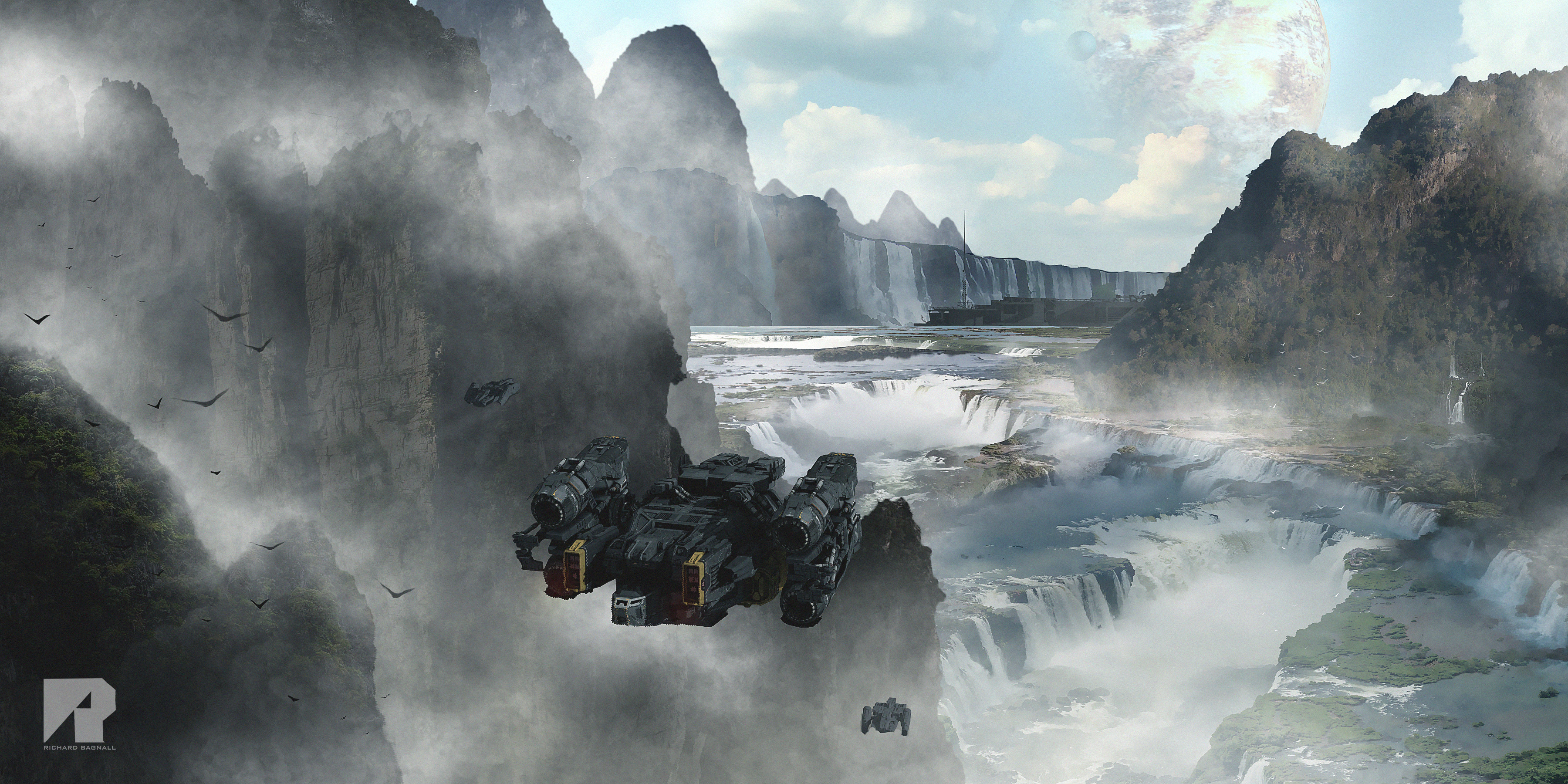
A mediterranean world, and the main colonization point for the 4CA’s efforts to populate the system. Storms are very frequent all throughout the colonized spaces, serving as the main weather hazard to contend with upon the planet.
There is a considerable difference between the capital of the planet - officially known as New Gibraltar Prime, but typically shortened to New Gibraltar anyway - and the outlying settlements around it.
The capital is sleek, with a generally refined appearance consisting of many smooth buildings with plenty of whites, greys, and glass incorporated into their designs. Part of this is due to how the city’s initial construction and development efforts were jumpstarted by the materials from the colony ship used for the initial landfall upon the planet. As a result, the city is largely self-contained in regards to its maintenance and day to day needs.
New Gibraltar Prime is, additionally, very dense in its composition - due to both a lack of personal vehicles for the average resident, and the need to ensure that space is readily available for colonist aspirants.
Workers for the Port Authority - whether directly with the government itself, or through third party contracts with independent vessels - are guaranteed residence within the capital city via a standardized, if somewhat cramped, employee residential program. There are a myriad of multi-floor apartment complexes that both rise multiple stories high, as well as multiple floors below the ground.
However, of particular note is the lack of developed supply lines to the planet as of the present time - resulting in very slow growth. The capital city is also walled and barricaded from the outside world, consisting of hardened material walling with checkpoints for entry and departure to the outer wilds, with energy barriers utilized for patching holes and expanding zones of influence.
Settlements outside the capital tend towards a drastically different appearance - created more with a utilitarian aesthete with buildings made for function over form, with important facilities stacked on top of one another with open spaces for communal movement and activity. They are much smaller than the capital city, closer in scope to small towns, but share the main city’s propensity for hardened material and energy barriers. However, due to a lack of reliable supply income with New Gibraltar Prime’s own slow growth, it is not uncommon to have a greater focus on active guard postings as early warnings for the residents, and deterrents for any creatures that venture too close.
¶ Summary and Hooks
- Rainy, warm mediterranean world. It’s as close to idyllic and comfortable as this system is going to get for many.
- The average Nine Lives Promenade employee will either live here, or want to live here. It has the promises of a comfortable life within the capital itself, and active employees are guaranteed residence - akin to company housing. It can very easily not be comfortable or otherwise feel too cramped, however.
- Generally the capital will be calm and peaceful for the average person. Most incursions are with the local wildlife, the planet teeming with life in an oft-deleterious capacity.
- A more frontier-hardened character could have a greater interest in the outer settlements, and the wilds beyond. Their services would even be sought out by the 4CA for protection or scouting duties.
¶ Accord
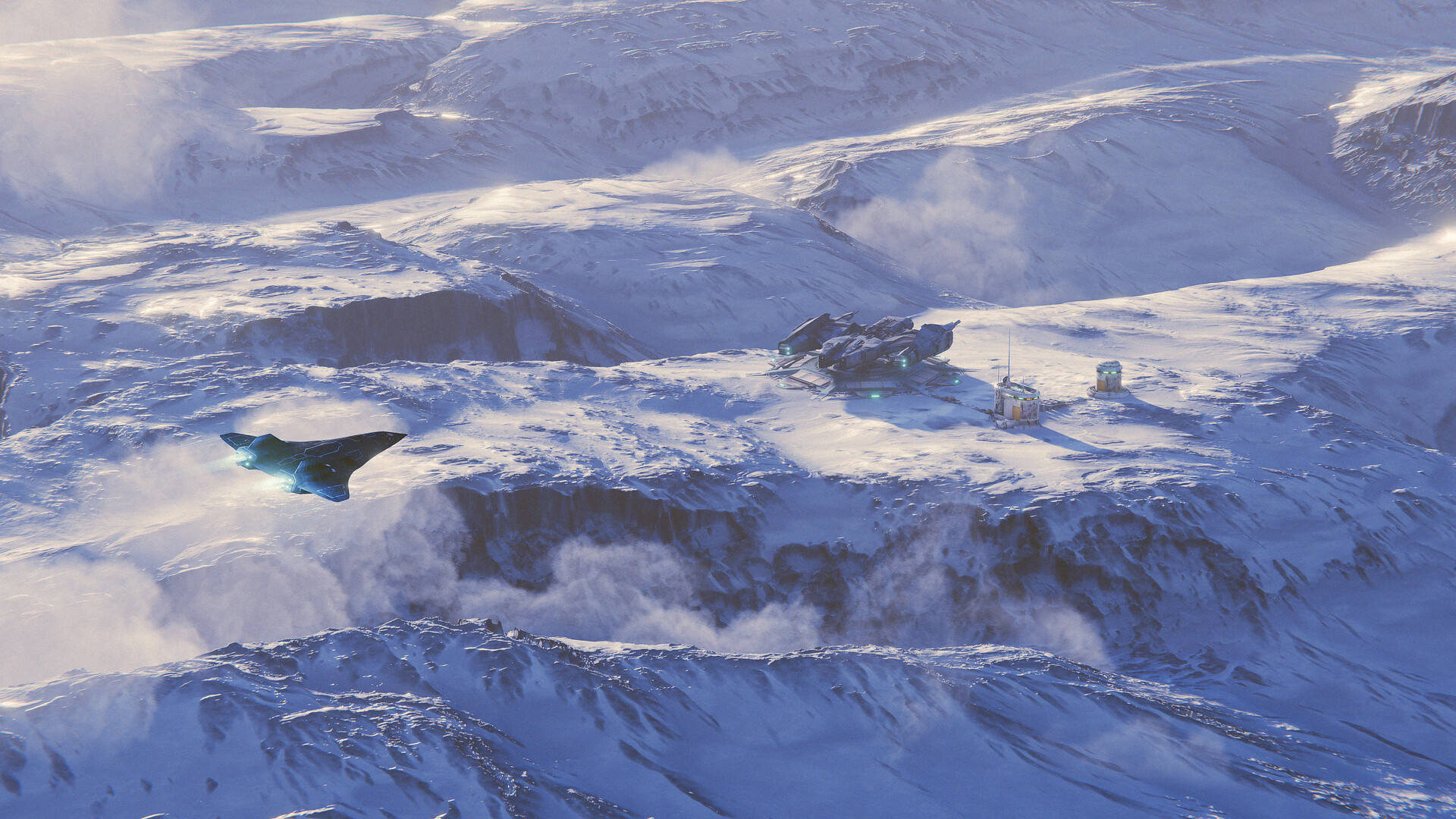
A boreal tundra world that lies just past New Gibraltar in distance to the central star of the system. Nearly perpetually cold, this planet is much less forgiving to the less-hardened or to species that thrive in a warmer climate.
However, life sustains fairly well on the planet itself - enough so that it can be considered within the bounds of a hospitable colonization point for the 4CA. Often flora and fauna can be seen peeking through the otherwise endless swathes of snow and frozen dirt, with verdant, pine-like forests emerging as one draws closer to the planet’s equator.
The atmosphere of the planet is breathable to most forms of life, but protective equipment has been a mandatory staple for expeditions that creep closer to the northern and southern poles of the planet. Weather conditions drastically worsen the further one goes, with the poles themselves being nearly completely inhospitable to all but those adapted to extreme cold, and capable of surviving near-endless blizzards.
Presently, the colonists associated with the Port Authority have no immediate plans to colonize the planet. While it would be a viable option for expansion, the problems with New Gibraltar’s growth restrict their scope. However, due to the close proximity between the two planets, there are not any major presences from other interested parties as of this time.
The planet is still filled with life, however - both in the forms of indigenous fauna, as well as there being signs of tribal life. It is unclear how communicative said tribes are as of this time, as they have only been observed at a distance with little direct contact.
As of the present time, the 4CA has a few scattered expeditionary and ecological outposts dotting the land, primarily around the equator zone of the planet.
Deep below the planet’s surface lies a considerable reserve of plasma - recently discovered, though presently highly sought out by the 4CA for its resource needs. There have been some debates regarding what to do with it, though without an active plan from the government body, they are without a heavy purpose. Phorids among the colonist population have strongly lobbied for leaving the planet as-is.
There have been attempts to explore the northern and southern poles - while they have been deemed failures, the bodies of those who made the ventures have never been recovered. However, what little equipment was left behind leads other scientists to believe they were investigating anomalous activity within the inhabitable zones. For one reason or another, the original expedition teams seem to have had cause to believe the blizzards were unnatural in their ferocity.
¶ Summary and Hooks
- Much colder than New Gibraltar. The equator would be pretty manageable to live in though - but there’s no government action being taken to colonize yet.
- Exploratory and studious characters could find reason to want to travel to Accord to study the local wildlife and weather conditions.
- Phorid characters would know about the plasma reserves within Accord, or may have even come from them. Advocates want that plasma as undisturbed as possible so they could potentially make use of it.
- Lost expeditions that attempted to explore the northern and southern poles. Possibility that they are inhospitable on purpose - suggesting something within those areas to investigate.
¶ Kitzol
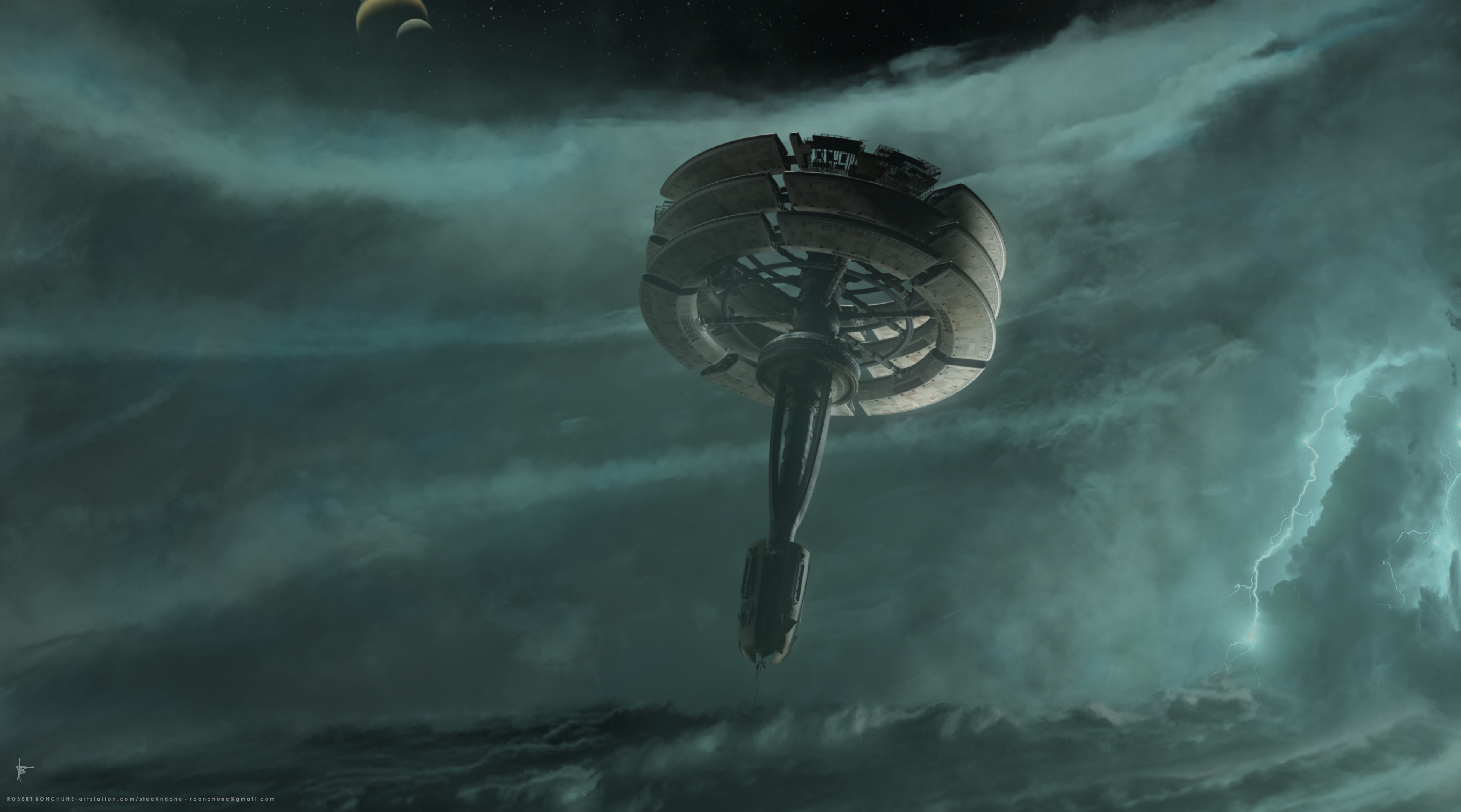
A gas giant far from the central star of Crusoe’s Rest. Composed primarily of hydrogen and helium, it serves as the primary source for these elements for the 4CA’s needs in the system.
In order to facilitate adequate extraction efforts, the 4CA has established multiple siphon stations that reside around the planet, anchored to its gravitational field. These vary in size and manpower without a uniform design, as such projects were contracted out to various companies hoping to get their foot in the door with active colonization in the system.
Of particular note however is the largest orbiting station on hand. Known as the CEPA (Celestial Extraction Processing and Administration) Station, it’s a sprawling, large-city sized commune of machinery that is directly funded and worked on by the Port Authority - even complete with a small military presence.
The reason for this is due to the station serving as a processing plant and port for the harvests from the outlying siphons. These contracted groups bring their hauls to CEPA, receiving payment in exchange at a direct proportion to what they harvest. From there, haulers can take the processed and usable gases to their intended destinations throughout the system. The CEPA can be a daunting place to reside in - but given its constant need and usage, those who work there often live on-site. Generally, this will be a place of consideration for those who are content working with the 4CA more directly, and the work offers many good benefits for workers due to its far proximity from the habitable worlds.
In addition to this is an antimatter capture net and processing facility - occupied solely by troopers from the Void Corps, the station referred to somewhat obtusely as ‘Void 4.’ Completely barred from the public, it exists in a no-fly zone for non-authorized ships at the opposing end of Kitzol’s orbit across from the CEPA station. Breaching its area can result in fines, arrest, and ship seizure. Dreadnought-class ships within Void 4’s vicinity are a common sight, primarily due to the antimatter’s importance as a component within dreadnought reactors. This fact is well known to those who care among the civilian populace, and the near-constant guaranteed presence of heavy-duty military hardware and forces within the system results in highly contrasting opinions regarding it.
¶ Summary and Hooks
- An avenue for more direct government involvement. CEPA and Void 4 both have military presences from the Void Corps, but CEPA allows for more civilian involvement with both living and direct work, as well as contract work for haulers and siphons.
- Characters who work in the CEPA Station, or wish to, can find the location to operate very similarly to a military base with civilian access.
- The Void Corps presence at Void 4 is fierce and heavily armed, both with a rooted garrison and the near continuous presence of at least one dreadnought. This can be a subject that characters with opinions regarding the military will want to address, such as if such a heavy presence so close to where they live is comforting or unnerving.
¶ Cahron
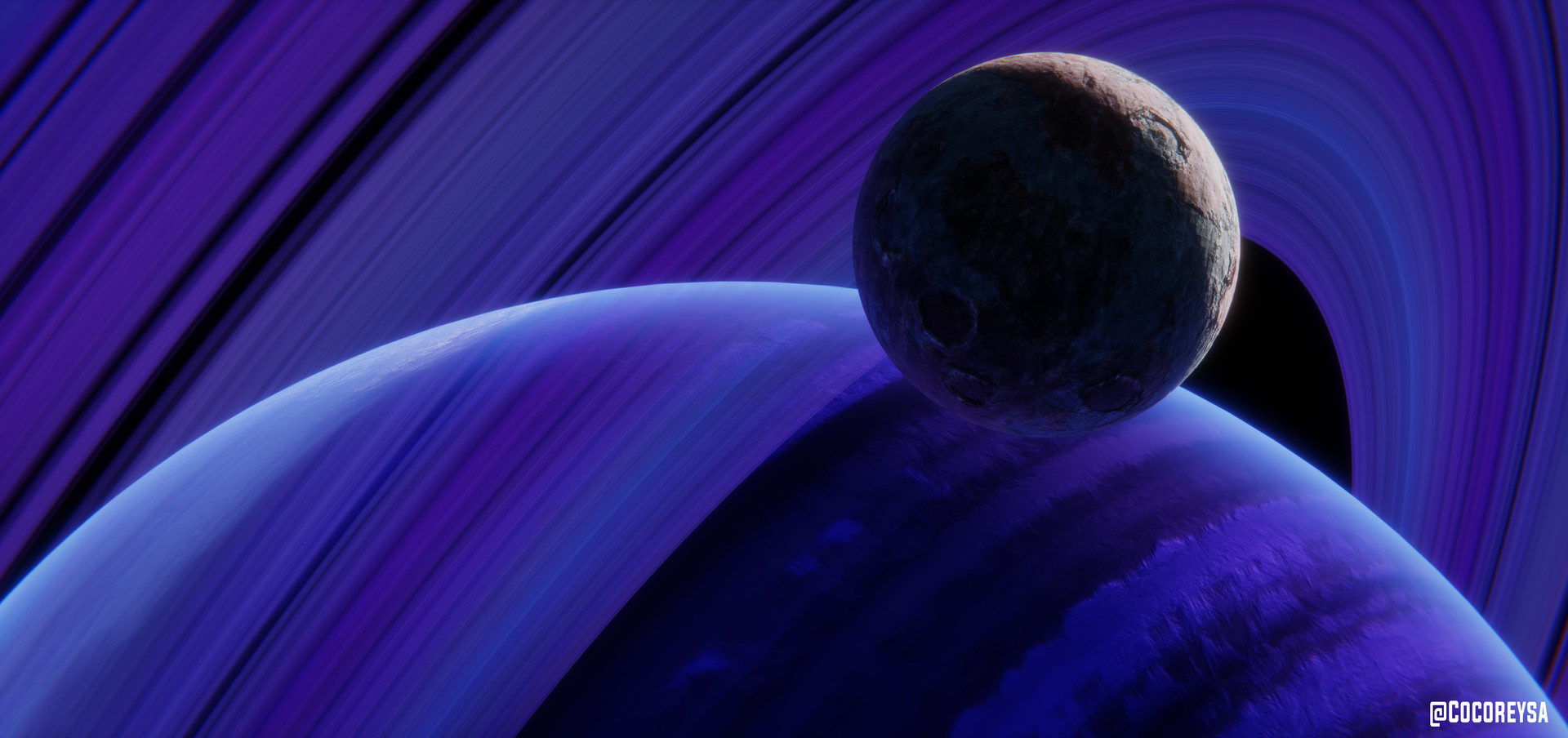
Another gas giant in Crusoe’s Rest, farther away from the central star than Kitzol. Its primary composition is that of plasma, but its internal makeup is a medley of gasses - including elements of oxygen, nitrogen, and helium. The gas giant is primarily harvested for its plasma reserves, however - with the other elements considered more as impurities to filter out with the extractors placed around the planet’s gravitational field. As of present there are only a small handful of these extractors - each under contract with the 4CA.
These extractors deliver their hauls to a central station, not unlike the CEPA Station at Kitzol. However, unlike CEPA, this station, known as Void 5 Processing - or VFP for short - is almost barren in comparison. It’s staffed very lightly, yet entirely by military forces. Many of the systems to process and prepare plasma for hauling are automated. Many of those who pass through claim they barely see a living being inside - and whatever they do is clad in standard issue heavy armor.
There is speculation that the troops at Void 5 Processing are primarily stationed as observers for Cahron’s other notable feature - an ice moon known as…
¶ Truth
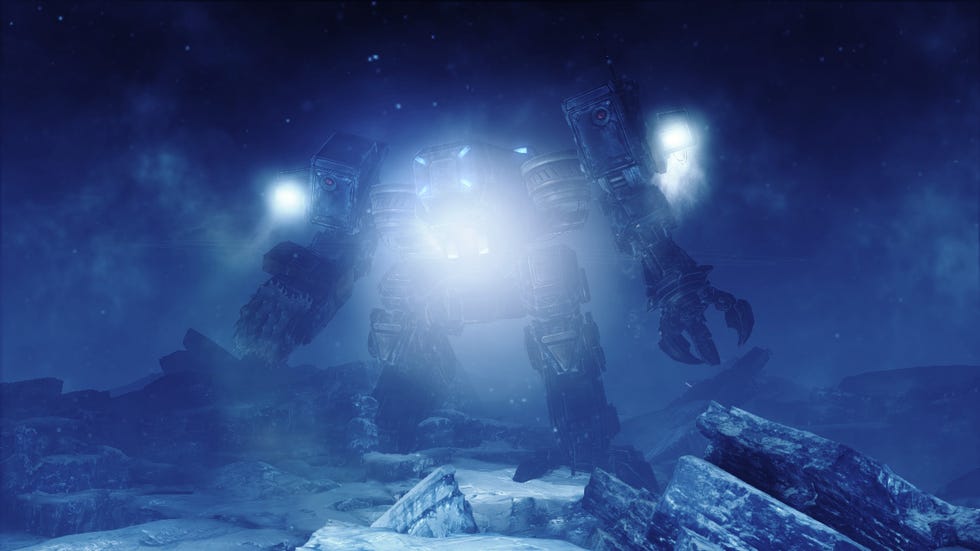
The orbiting satellite of Cahron, Truth is an extremely hostile environment - yet one that has pulled much in the way of interest from all parties. Battered by both constantly changing atmospheres from Cahron’s varied gas exhausts and hostile fauna and anomalous creatures, the moon would by all rights be considered inhospitable in many senses of the word.
Truth has however been deemed just manageable enough to be worth pursuing for resource extraction and expeditionary missions upon its surface - both for incredibly lucrative reserves of precious metals and material otherwise not found reliably elsewhere, and for its odd ruins and monuments that dot the landscape.
There is no central city structure on Truth’s surface, instead playing host to a wide assortment of stations, outposts, and sealed-off encampments. While some of these are large enough to foster some degree of community, many of the longer lasting outposts require a fairly reliable way to obtain resources and manpower from outside areas, lest they inevitably falter to the moon’s hostilities. Many of the smaller ones are host to various bands and gangs of wildcat miners, hoping to strike it rich -- and hoping that Truth's disposition prevents discovery of unsavory activities.
The Nine Lives Promenade maintains a presence upon Truth with their own camp - a series of small, contained structures that primarily act as a staging point for its miners and scientists to venture out into the wastes.
Without any central power attempting to vie for control of the moon, it rests as an open frontier for its resources and secrets - but as such there is a wary general policy of avoidance, when it comes to factions with interests and stakes upon the moon’s surface. There is little in the way of cooperation between those who meet and interact.
Explorations have found various types of structures - whether they be the outposts of other factions, or older ruins. The latter has been given an increased focus as of recent times, with the advent of the “Resonance” phenomena escalating across the system. Resonant activity on the moon’s surface has found a notable increase over time, giving a potential avenue to explore in expeditions.
¶ Summary and Hooks
- Much of Cahron and Truth revolve around the moon itself. Cahron’s resource gathering is much more lonely and foreboding compared to Kitzol’s, due to its relative silence and lack of personnel.
- Void 5 Processing does not have a substantial presence, but it is entirely occupied by Void Corps forces. While its personnel will interact with those who pass through and respond to hails, they will not make an active effort against larger threats.
- Miners will have near constant interaction with Truth - as gameplay-wise, it is associated with the ice moon map. It’s very lucrative in hazard pay, but given the wild scope of things that can happen, long-term mining on the planet can be hazardous to one’s mental or physical health.
- As Resonance develops more in the scope of the story, Truth will be a common option for incidents and strange things to happen.
- Living on Truth, in the long term, is considered to be very odd. While it’s not a bad or wrong idea to do so, it would mark a character as very eccentric or otherwise off by the average employee if the character in question calls this place home.
¶ Hallow
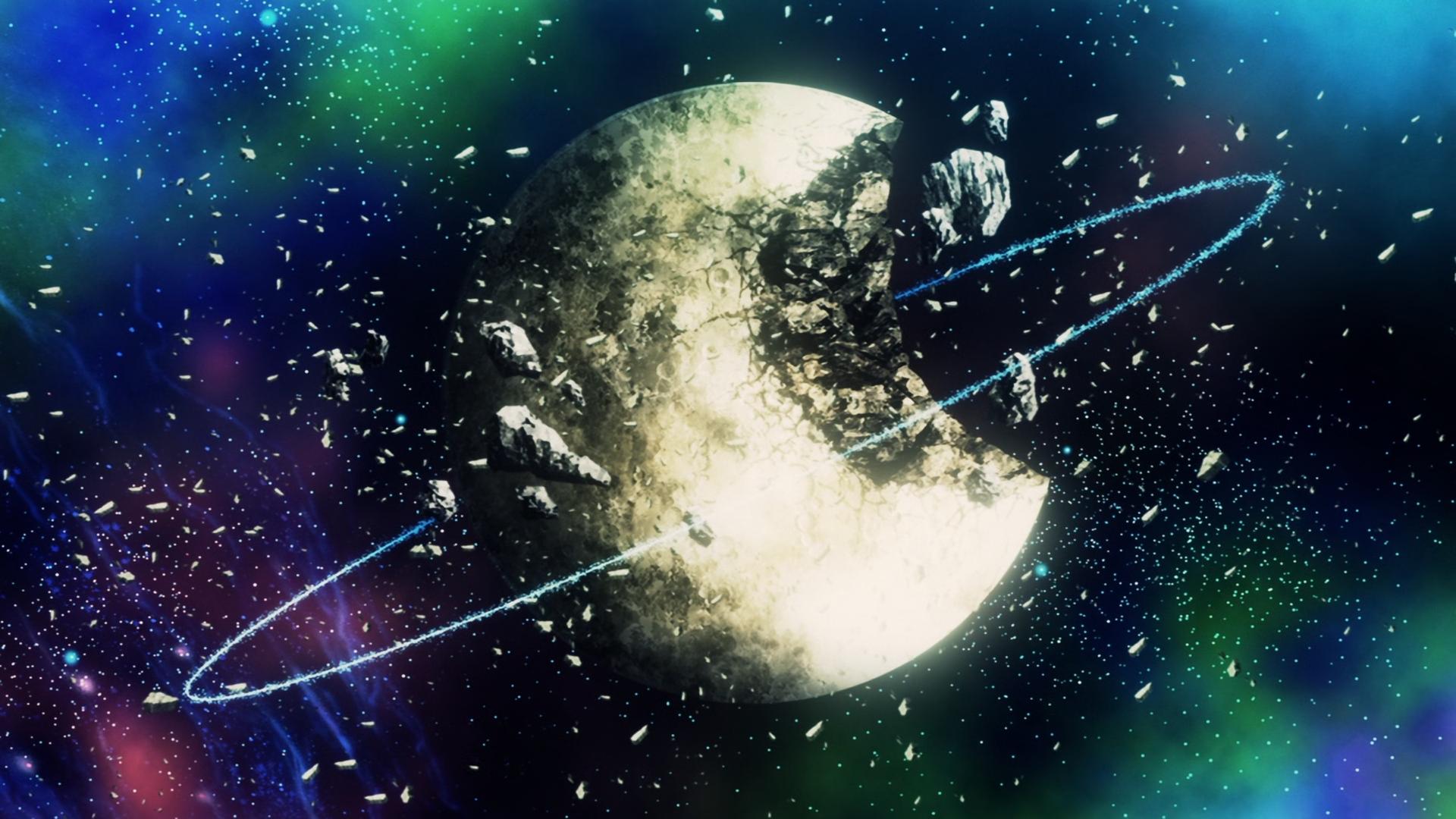
A largely unremarkable, relatively small planetoid composed mainly of rock and ice. Without atmosphere and far, far away from settled space, it is relatively absent of frequent traffic, and the planetoid’s surface only occasionally sees hauler ships inbound to receive harvested ice from sparse, moving extraction platforms.
There have long been myths and legends of the buried treasure of Hark Crusoe upon Hallow, but as of now these are largely unsubstantiated. An attempt was made in the 2490s to uncover the missing treasure, resulting in a catastrophic incident blasting open a large chunk of the planetoid. Nowadays, searching hunters typically only find the leftover remnants from past incursions to Hallow’s surface, such as outpost ruins and ship debris. Particularly determined hunters have been making moves to scour beneath Hallow's other half in the hopes that perhaps they've just been searching in the wrong locale.
Due to the missing pieces of the surface, Hallow has attracted the nickname of Hollow, and a variety of jokes about the place. The jokes of the system's inhabitants generally trend towards either ‘Hollow’ being a surreal, terrifying place where distorted creatures or the insane live, or the planetoid not existing at all; being merely an illusion projected by various forces up to Special Circumstances to mislead the public.
The presence of what amounts to ‘space junk’ has provided a means for salvagers to make their way to Hallow - but with its distance to settled space being so vast, salvage incursions are only done by those prepared both physically and mentally for long, solitary trips.
¶ Summary and Hooks
- Barren, frozen. Its ice is harvested for use with the 4CA, but it is not a high priority operation - as such the government worker presence upon Hallow is very thin.
- Treasure hunters chase dreams and rumors of Hark Crusoe's treasure within Hallow’s confines - and now, are searching deeper and deeper in the hopes of finding it. A failed venture in the '90s was made which resulted in a giant hole in the planetoid, but oddly enough this seemed to inspire people to search the other half instead. Anything is possible for what they may actually find.
- Salvage is a viable reason to come here. Those who need easy money, or those who prefer solitude, can find particular reasons to do so.
- Ohio-style jokes about Hallow are common and widespread.